(*1)「池田内閣 財界四天王」の他の三人は、櫻田武(日清紡績社長、日経連会長)、永野重雄(創立直後の経団連の運営委員、日経連常任理事、富士製鐵社長、東京商工会議所会頭、日本商工会議所会頭、池田隼人首相擁立に尽力)、小林中(日本開発銀行総裁、アラビア石油元社長)です。(経済同友会 Wikipedia による)
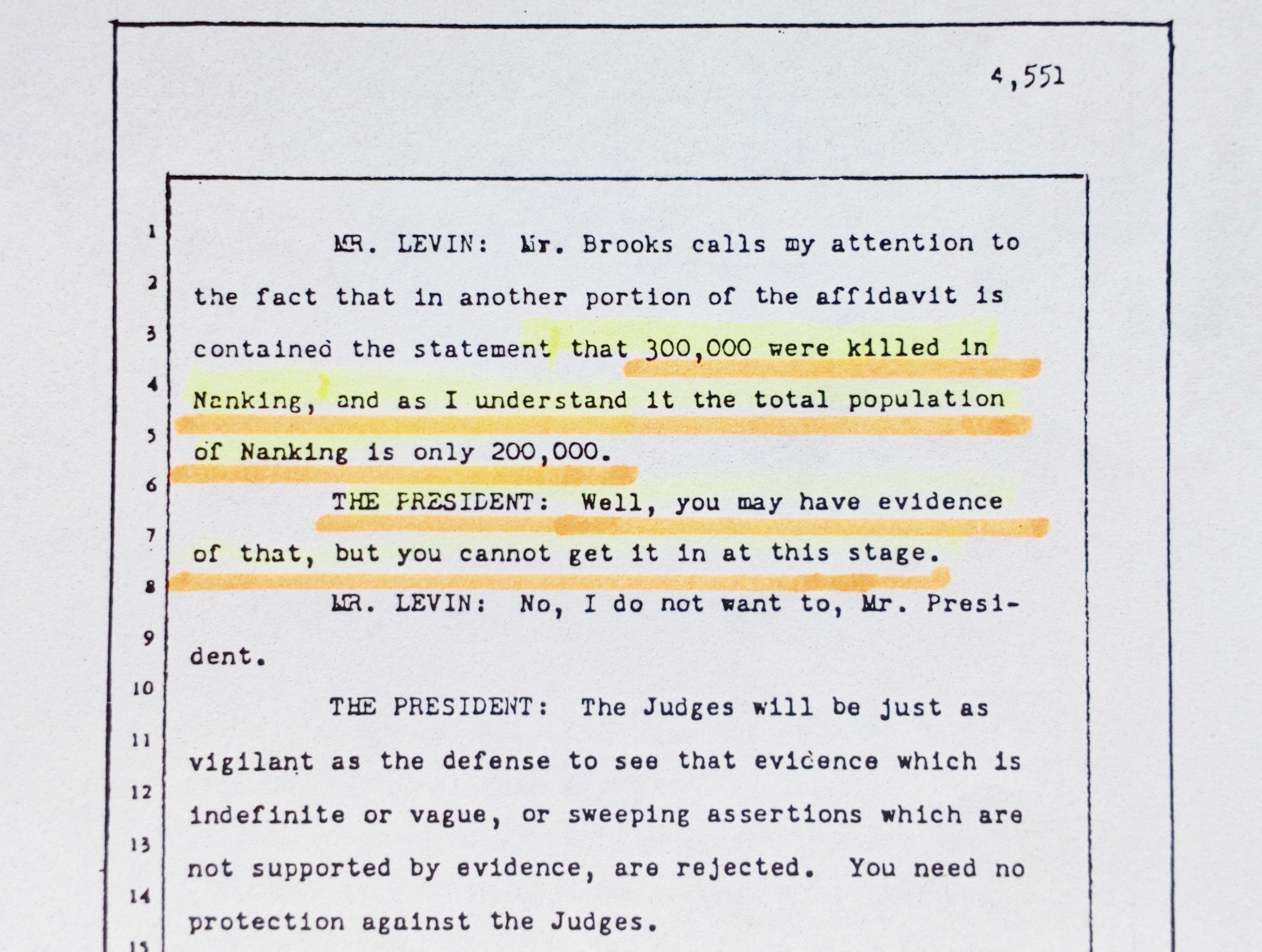
MR. LEVIN: Mr. Brooks calls my attention to the fact that in another portion of the affidavit is contained the statement that 300,000 were killed in Nanking, and as I understand it the total population of Nanking is only 200,000.
THE PRESIDENT: Well, you may have evidence of that, but you cannot get it in at this stage. ”
(p.4,551, “The Tokyo Major War Crimes Trial: the Transcripts of the Court Proceedings of the International Military Tribunal for the Far East” Edited by R. John Pritchard)
その資料とは、南京陥落時に南京に残り、「南京安全区国際委員会」を組織して「難民救援」を行った、米国人宣教師やドイツ・ジーメンス南京市所のジョン・ラ―べ国際委員会会長等が作成、日本大使館を通して日本軍当局と折衝するため提出した文書や書簡をまとめた『Documents of the Nanking Safety Zone=南京安全区[木當(一字)=とう]案』(Edited by Hsu Shuhsi, 1938年刊)、及びラ―べ等国際委員会メンバーの残した日記や手紙など(『Eyewitnesses to Massacre』『The Good German of Nanking: The Diaries of John Rabe』)である。
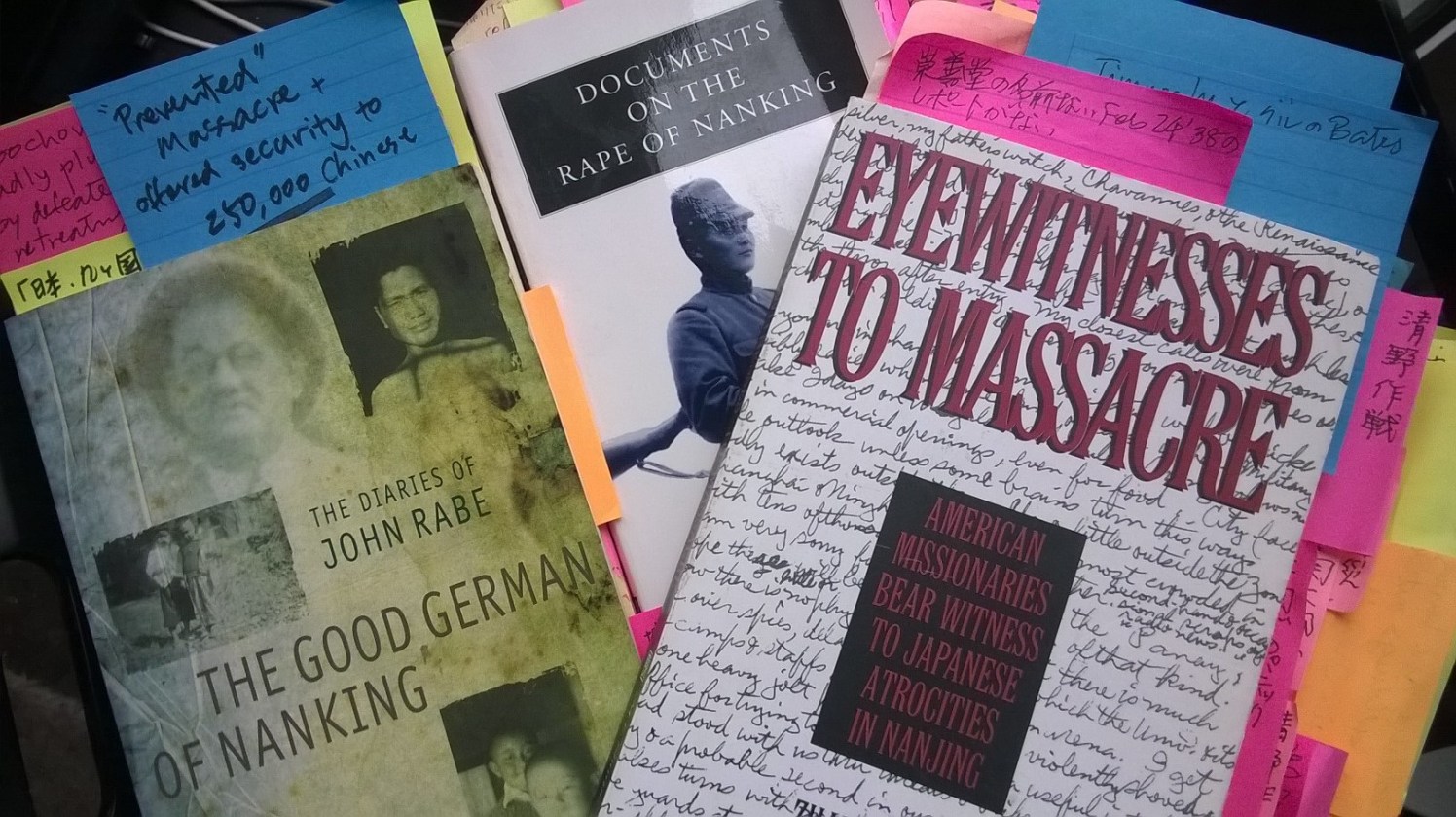
The Good German of Nanking: The Diaries of John Rabe (Edited by Erwin Wickert, 1998), Documents on the Rape of Nanking (Edited by Timothy Brook, 1999), Eyewitnesses to Massacre: American Missionaries Bear Witness to Japanese Atrocities in Nanjing (2001)
“Wang Kopang, the chief of police, has repeatedly declared that 200,000 Chinese are still living in the city.” (p.39, The Good German of Nanking: The Diaries of John Rabe)
Friday, December 31. Registration took place this morning—not of 260 college women, but of about 1,000 refugee women between ages of 17 and 30. By 9 o’clock they were lined up in front of Central Building and given a discourse—first by the Japanese military official, and then by Mr. Jan Yung-gwang—both in Chinese. (Minnie Vautrin, Eyewitnesses to Massacre, p.368)
“During the afternoon there was not a great deal to do at the office. Trucks were interfered with because coolies could not work until registered and I supposethe same will be true today. But after people once pass the bugbear of registration they feel much relieved. So far reports of any large numbers being taken off as soldiers, about 20 from the Middle School [MS].Fitch was told yesterday that even soldiers would be pardoned if they had families here to guarantee them and those who had not, would be taken for work corps, not shot.But the officer that took the 20 from the MS said they were to be shot. We certainly hope that will be kept to a minimum.” (Lewis S.C. Smythe, Sunday December 26, 1937, Eyewitnesses to Massacre, p.276)
Jan. 1, 1938—8:45 P.M. New Year’s Day Well, today has been the noisiest unhappy New Year I ever saw. Firecrackers began early this morning. But the barber was an hour late for his eight o’clock appointment and apologized by saying that he had to go out to fire firecrackers for the Japanese! Well, anyway the children had a grand time firing the crackers given out by the Japanese! (Lewis S.C. Smythe, Eyewitnesses to Massacre, p.284)
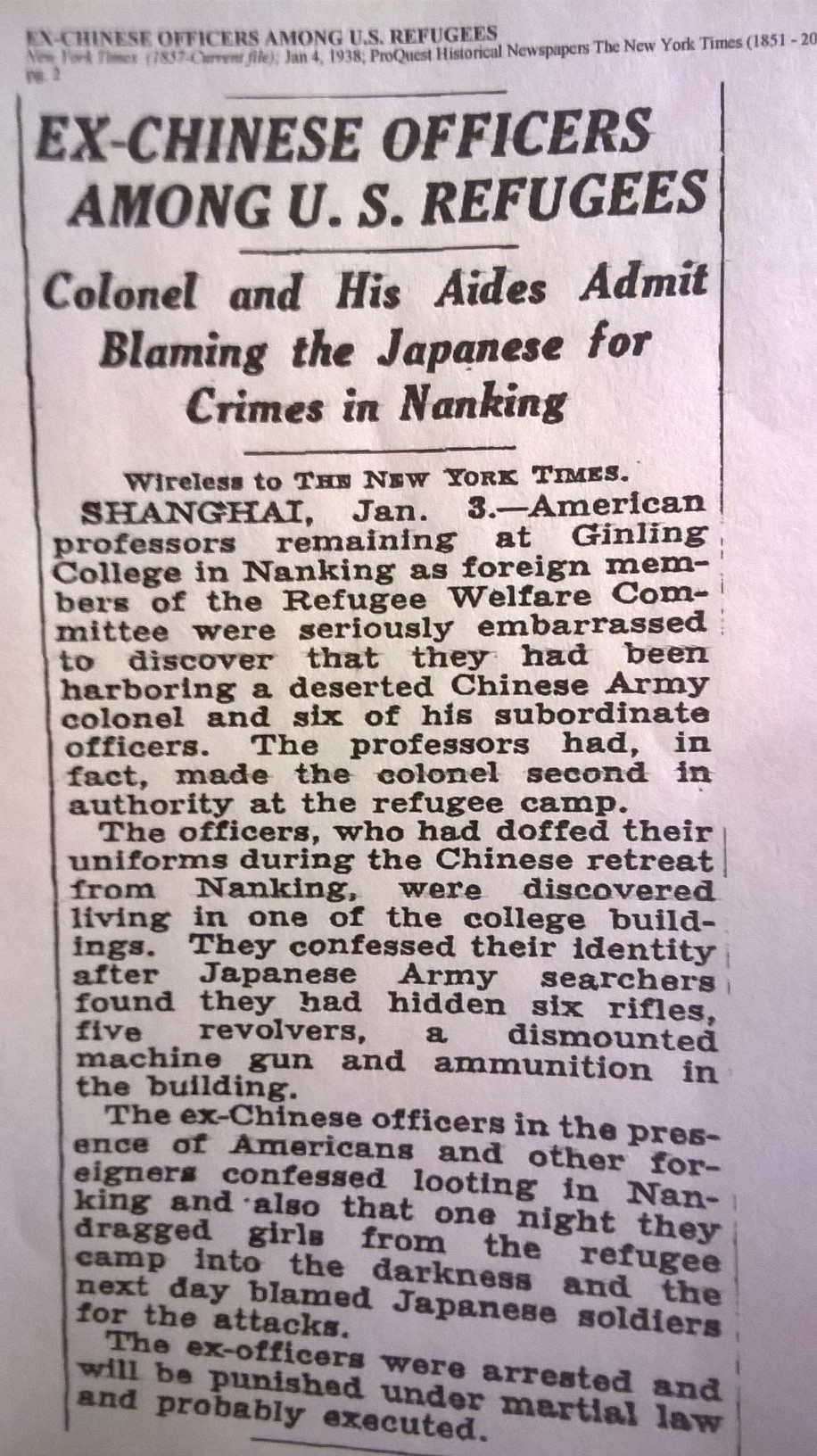
“Now the Japanese are trying to discredit our efforts in the Safety Zone. They threaten and intimidate the poor Chinese into repudiating what we have said.
Some of the Chinese are even ready to prove that the looting, raping and burning was done by the Chinese and not the Japanese.
I feel sometimes that we have been dealing with maniacs and idiots…” (James A. McCallum, Eyewitnesses to Massacre, p.238)
“Dear Mr. McKim, It has been brought to my attention that you have been writing letters to the Times saying that the stories of Japanese atrocities in Nanking were false.
[…] If I had not seen with my own eyes the things that I have seen I could not have believed that such things could have had happened in the modern world.” (John G. Magee, A Letter to The Rev. J. C. McKim, April 2nd, 1938, Eyewitnesses to Massacre, p.198)
“Just day before yesterday we saw poor wretch killed very near the house where we are living. So many of Chinese are timid and when challenged foolishly start to run. This is what happened to that man. The actual killing we did not see as it took place just around the corner of a bamboo fence from where we could see.” (John G. Magee, Sunday-December 19, Eyewitnesses to Massacre, p.171)
“ 185. On the morning of January 9, Mr. Kroeger and Mr. Hatz saw a Japanese officer and soldier executing a poor man in civilian clothes in a pond inside the Safety Zone on Shansi Road, just east of the Sino-British Boxer Indemnity Building.
The man was standing in the pond up to his waist in water on which the ice was broken and was wobbling around when Mr. Kroeger and Hatz arrived.
The officer gave an order and the soldier lay down behind a sandbag and fired a rifle at the man and hit him in one shoulder. He fired again and missed the man. The third shot killed him. (Kroeger, Hatz)
Note: We have no right to protest about legitimate executions by the Japanese army, but this certainly was carried out in an inefficient and brutal way. Furthermore, it brings up a matter we have mentioned many times in private conversation with the Japanese Embassy men: this killing of people in ponds within the Zone has spoiled and thereby seriously curtailed the reserve water supply for the people in the Zone. This is very serious in this long dry spell and with the city water coming so slowly.” (p.78, “Documents on the Rape of Nanking” edited by Timothy Brook)
The following cases are only the ones we have been able to get first hand reports of: (The first two are cases overlooked in typing up previous reports.) (p.116, Documents on the Rape of Nanking)
Memorandum of Chancellor Scharffenberg for the Embassy in Hankow
[……]
On 5 February, all officials were again invited to a tea [by the Japanese Embassy], as guests of garrison commander Major General Amaya.
We conversed very amiably for a good while, [then] Amaya…gave a speech…. His thesis was: Everything would have gone far better in Nanking without any Westerners. The Chinese had crept in under the Westerners’ coattails and by trusting in our intervention, had dared to defy the Japanese. In Yangchow…everything had fallen into place wonderfully after a few days, and commercial life had scarcely been interrupted.
The high point of of his speech was: “Please don’t interfere in my dealings with the Chinese!” [……]
The Safety Committee has long been a thorn in the side of the Japanese, but since 4 February a large number of Chinese have in fact left the camps and found shelter somewhere in the city. In my view, Herr Rabe as its chairman has indeed achieved extraordinary things, but he has let himself be lulled far too much by the Americans and is helping promote American interests and missionaries who are out to catch souls en gros.
Rabe realises as much himself, and is trying to get Japanese permission to go to Shanghai, but he is still actively trying to counter the bloody excesses of Japanese looters, which have unfortunately increased of late. To my mind, this should not concern us Germans, particularly since one can clearly see that the Chinese, once left to depend solely on the Japanese, immediately fraternize. And as for all these excesses, one hears only one side of it, after all.
The chief officer of the Embassy [of Japan] formally referred to me as “anti-Japanese” ……. Some of the foreign group here have continually besought me (and to a lesser extent Smythe and Mills)—Fitch also when he was here—to cease the thorough reporting and protesting and indirect publicity, lest all missionaries be excluded from Nanking. (Miner Searle Bates, letter to Timperly, March 3, 1938, Eyewitnesses to Massacre, p.31)
これはベイツが、ハロルド・ティンパーリーに宛てて書いた手紙である。ティンパーリーは、国民党が外国人を使った国際プロパガンダ工作の一環として出版させた『What War Means: Japanese Terror in China=戦争とは何か:中国における日本の暴虐』の著者で、ベイツとスマイスは上海を拠点とするティンパーリーに日本軍の情報、南京の状況を書き送って、英語による国際的な反日プロパガンダの発信に携わっていた。
とはいうものの、これまで挙げてきた3冊の本「The Good German of Nanking: The Diaries of John Rabe (Edited by Erwin Wickert, 1998)」「 Documents on the Rape of Nanking (Edited by Timothy Brook, 1999)」「Eyewitnesses to Massacre: American Missionaries Bear Witness to Japanese Atrocities in Nanjing (2001)」を精読するだけでも、南京攻略戦、南京陥落時とその後の様子は、映画を見るように鮮やかに見えてくる。肝心なのは、まず先入観を捨てることだ。
国際委員会は日本軍が安全区を砲撃しなかったことを感謝していた
Letter to Japanese Commander of Nanking
December 14, 1937
Honorable Sir,
We come to thank you for the fine way your artillery spared the Safety Zone and to establish contact with you for future plans for care of Chinese civilians in the Zone.
At this time of writing [march 31, 1938], we are connected by train, bus and merchant boat with Shanghai and it is said that 600 Japanese civilians including women and children are now here. (Minnie Vautrin, Eyewitnesses to Massacre, p.345)
Nanking’s population has now come up to practically 400,000 (as compared with 250,000 in the Safety Zone period and just 1,000,000 before the war). Recent additions are largely refugees from the country, some of whom went there from the city in search of safety, but have now used or been deprived of all their money (and often of their clothes) in the precarious hinterland of guerrilas and punitive raids. (Miner Searle Bates, Eyewitnesses to Massacre, p.44)
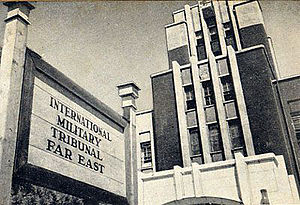
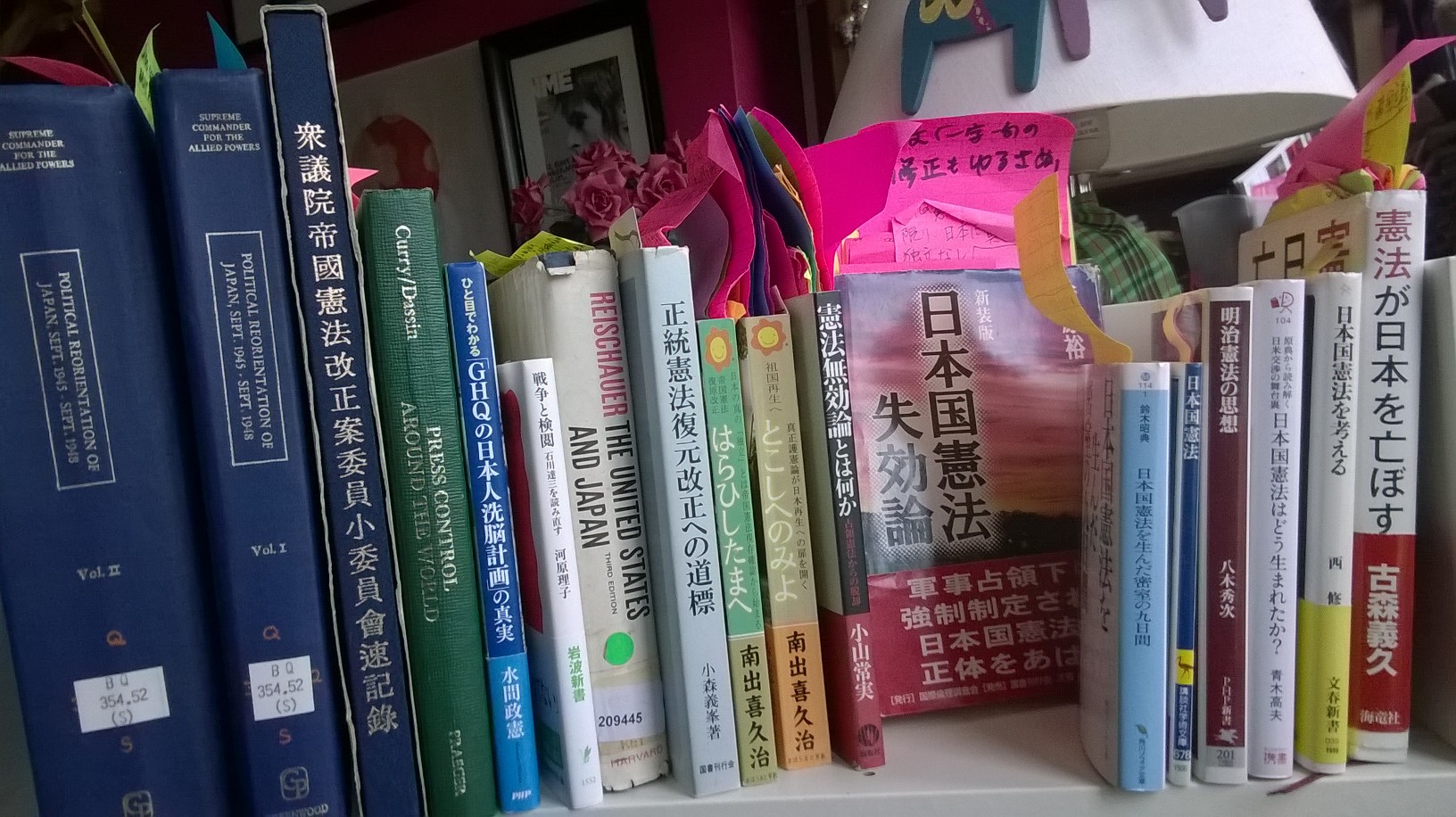
法学部のある大学には必ずその図書館にR. John Pritchardの「 The Tokyo major war crimes trial: the transcripts of the court proceedings of the International Military Tribunal for the Far East」全124巻(速記録114巻とガイド10巻) を所蔵させる。





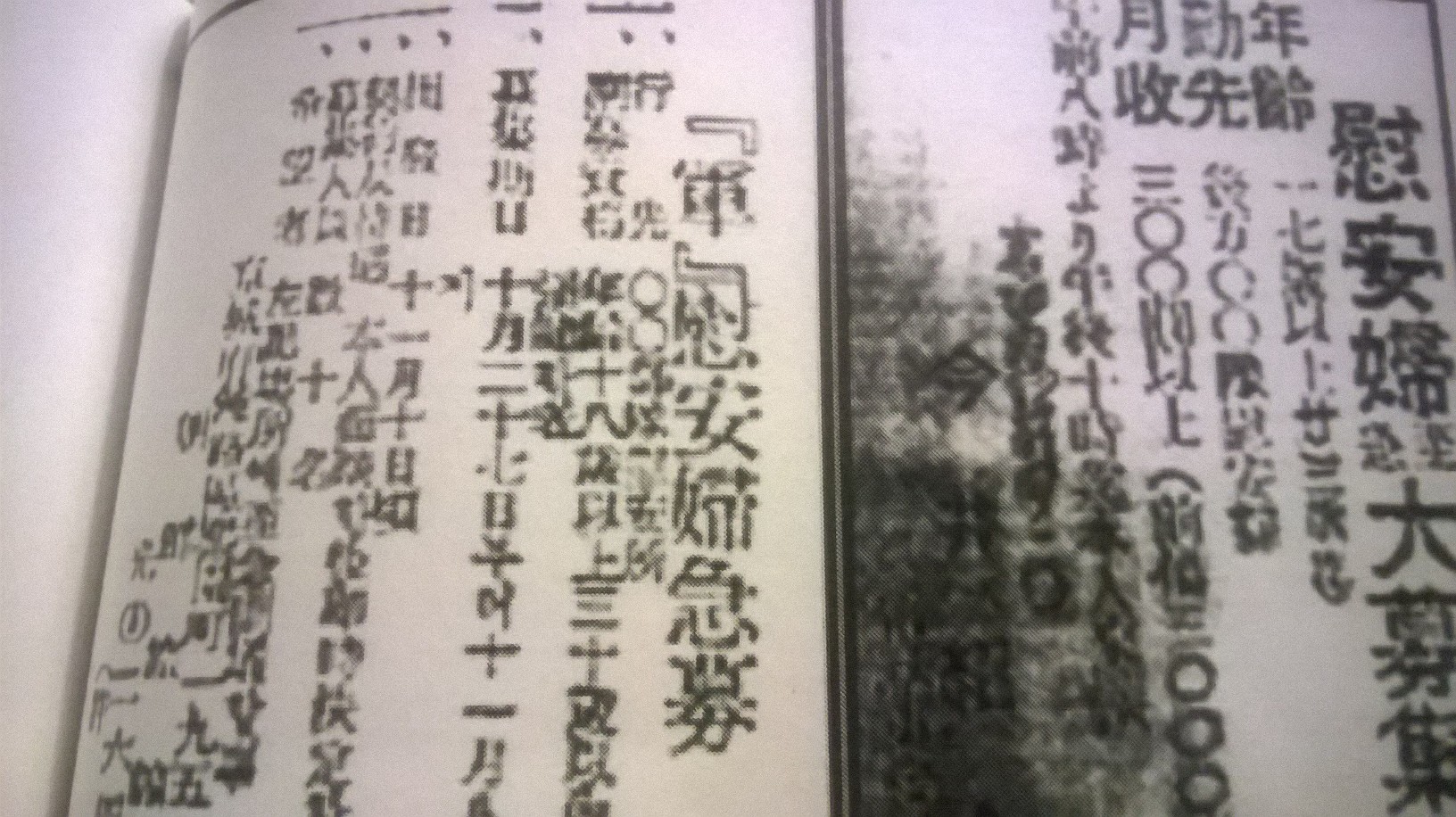
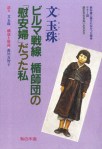 大東亜戦争当時、大日本帝国の一部であった朝鮮半島、大邱出身の文玉珠(ムン・オクチュ)も、両親が両班(ヤンバン、李氏朝鮮の貴族・支配階級)ながら、父が亡くなった後の食うや食わずの貧乏暮しに耐えかね、子供時代から「キーセン(妓生)になって、歌や踊りをじょうずにすれば金持ちになれる」と考えていた。「そのころは、女が金を稼ごうと思ったら、家業を手伝うか、このキーセンになるか、それとも身を売る女郎になるくらいしか方法はなかった」からである。
 日本の美しい魂を、とりもどす